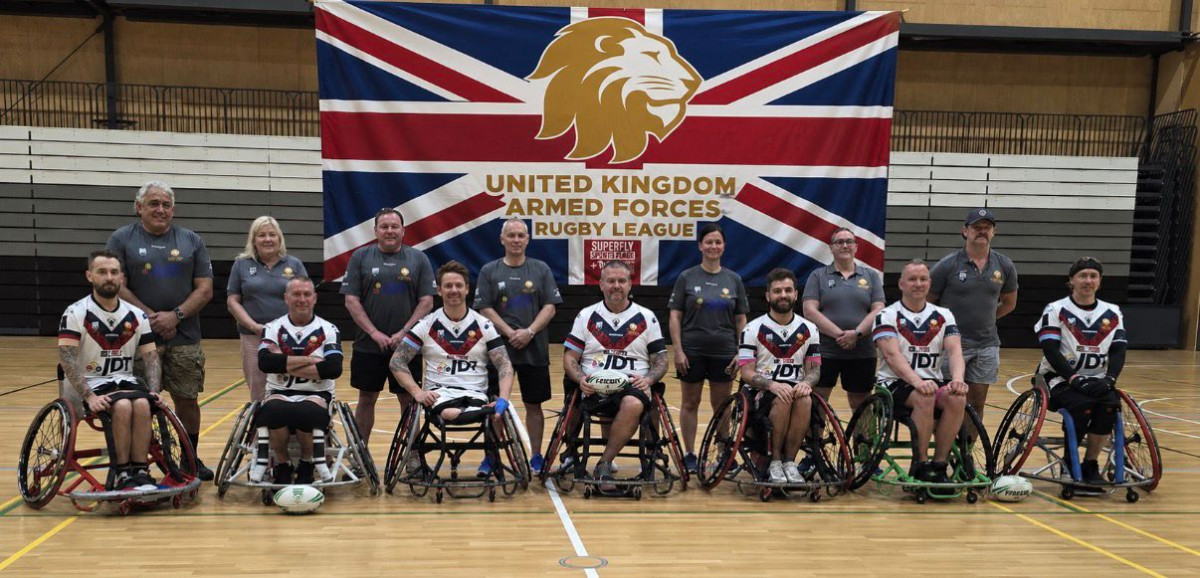
UK Armed Forces Show Courage in Defeat as Australia Clinch Dramatic ANZAC Victory
The inaugural ANZAC Armed Forces Wheelchair Rugby League clash between the UK Armed Forces Wheelchair Rugby League Team and the NRL Military Wheelchair Rugby League Team will be remembered not only for its dramatic finish but for the extraordinary resilience shown by a depleted and injury‑stricken UK Armed Forces side, which ultimately fell short against a relentless Australian comeback at South Pine Indoor Sports Centre.
Played in the true spirit of ANZAC — courage, resilience, and comradeship — the contest delivered a powerful showcase of elite Wheelchair Rugby League, with both teams embodying the values at the heart of the occasion.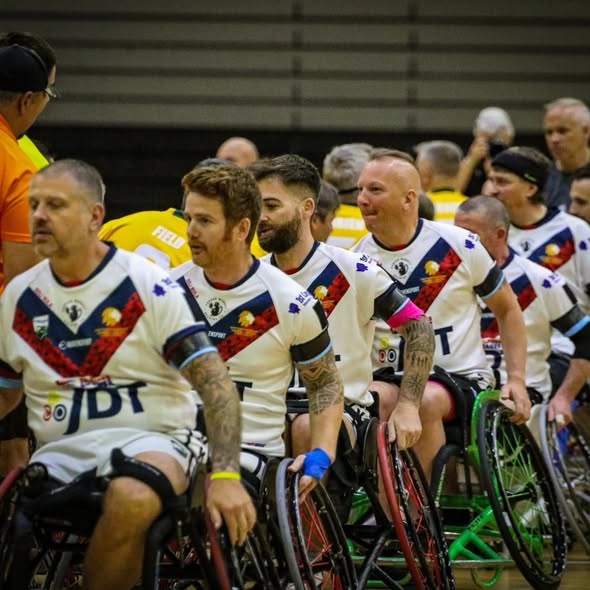
First Half:
Fast Start for UK Despite Early Setbacks
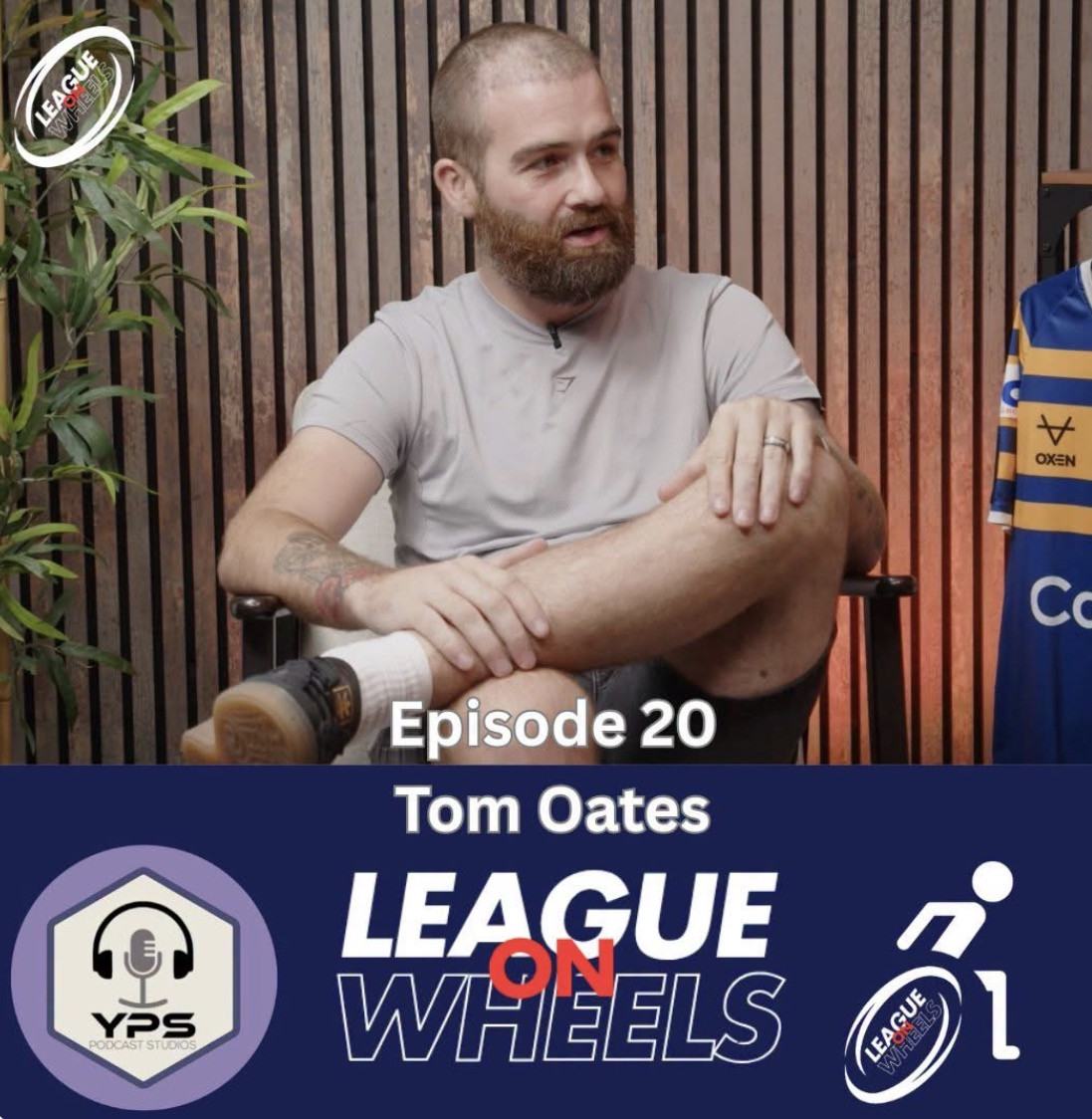
The UK Armed Forces wasted no time in stamping their authority on the match, with Tom Oates crossing early to open the scoring and set the tone.
However, the warning signs of a gruelling encounter emerged quickly. Strong early contact defined the opening exchanges, and the physical toll soon became evident. In the first half, James Simpson‑Hill suffered a dislocated thumb but remarkably continued to influence the game, orchestrating attack after attack and controlling the tempo.
The intensity escalated further when UKAF captain Steve Sampher was caught in a heavy Australian tackle and upended from his chair, an incident later confirmed to have fractured his elbow. Despite this, he continued, and the UK pressed on with determination.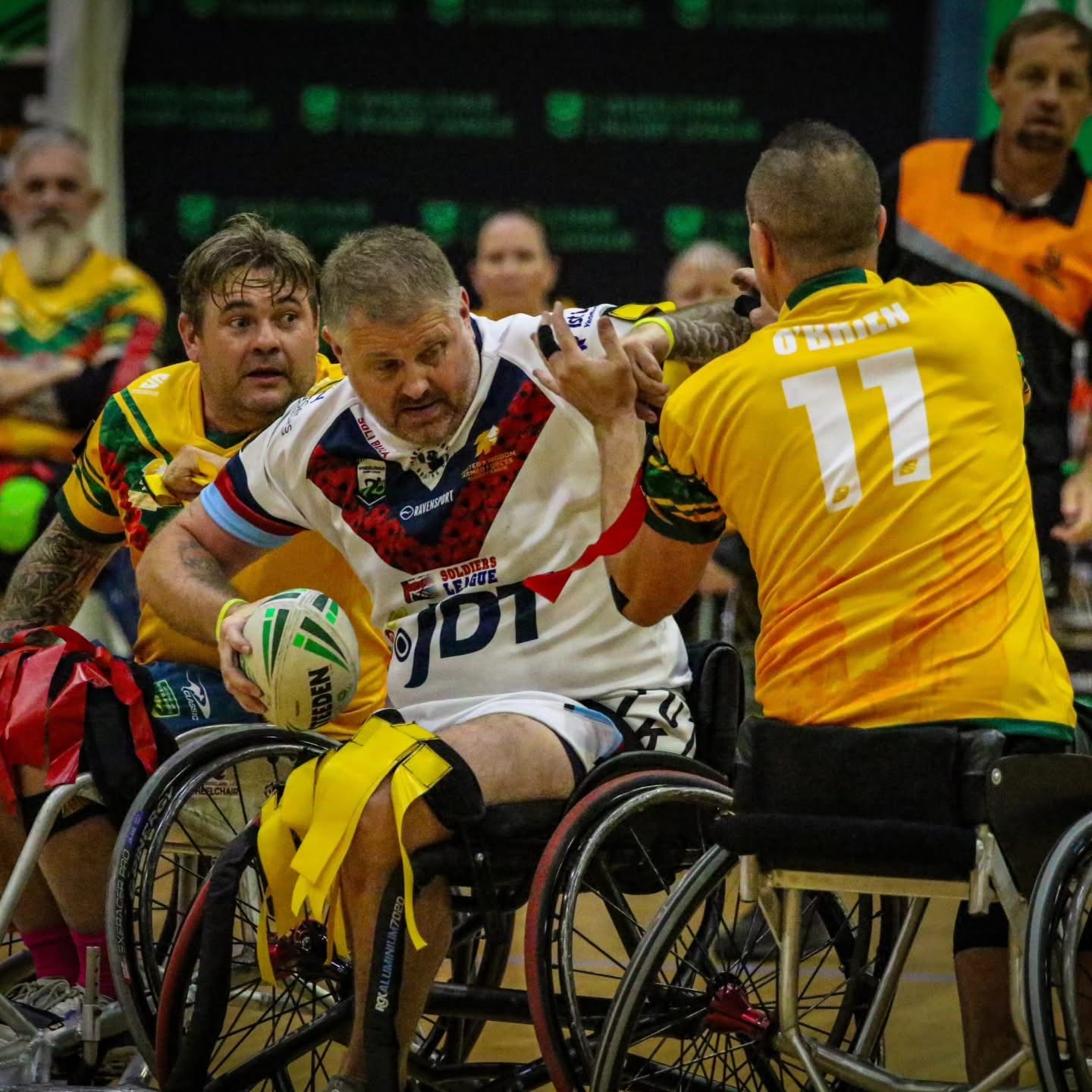
Australia responded through structured play, with Zeke Field finishing a slick passing move and converting to level the scores at 6–6. Momentum swung back and forth. Pete Arbuckle’s physical presence helped Australia gain ground, and Chris O’Brien combined with Brett Bazley for a long‑range try to edge the hosts ahead 10–6, but the UK refused to quit. They struck back in the 19th minute to level the game before Carl Shepherd’s sideline conversion nudged them ahead 10–12. From there, the UKAF surged. Simpson‑Hill produced a moment of brilliance, beating his defender from halfway to score under the posts and extend the lead to 10–18. Shortly after, Sampher broke through again to push the score to 10–24. A clever attacking kick saw Oates grab his second, stretching the advantage to 10–30. Although Field crossed late for Australia, the UKAF entered halftime in control at 18–30.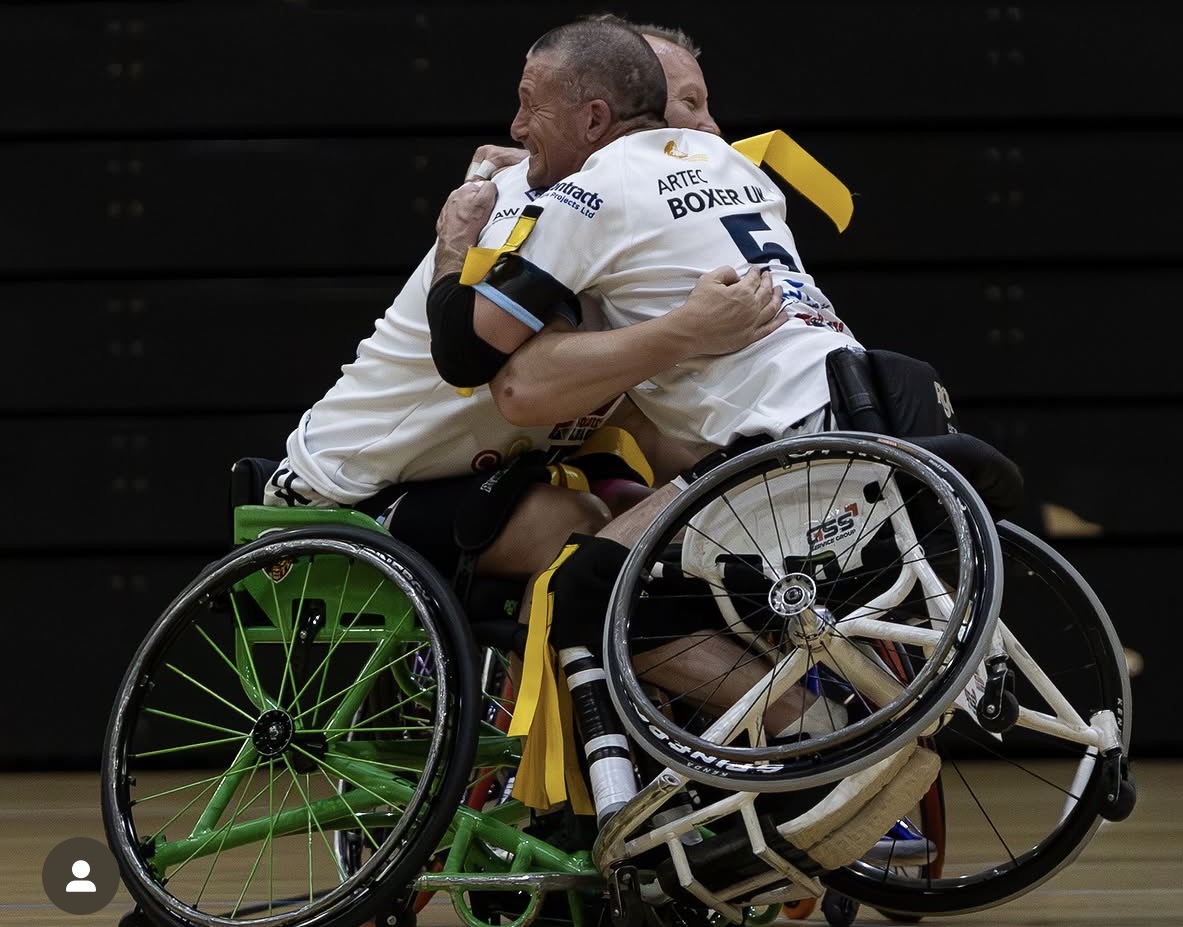
Second Half:
Momentum Turns Amid Growing Adversity
The second half began brightly for the UKAF, with Sampher crossing once more to complete his hat‑trick and extend the lead to 18–36, a testament to his leadership and resolve despite carrying a serious injury, but the physical toll on the UKAF side began to show. Justin Wells suffered a back injury early in the second half following a heavy tackle and was eventually forced from the contest due to persistent spasms. With numbers dwindling and multiple players carrying significant injuries, the UKAF were forced to dig deep simply to remain competitive. Australia sensed the shift; a chase‑down by Jayson Hooker and a crucial defensive intervention by Field lifted the hosts. Bazley then ignited the comeback, breaking through to score and convert, reducing the deficit to 24–36. Moments later, Arbuckle powered over to close the gap further at 28–36. Although the UKAF briefly steadied, with Simpson‑Hill and Shepherd combining to extend the lead, the momentum had irreversibly shifted and the comeback was firmly underway.
Late Drama Seals Australian Comeback
What followed was a stunning finale. Bazley took control, executing a perfect kick‑and‑chase before adding another try down the wing, narrowing the score to 40–46 with seven minutes remaining. Then came the decisive moment, with just three minutes left, O’Brien and Field combined once more, setting up Bazley to complete his hat‑trick and level the scores at 46–46. In the dying seconds, a penalty handed Australia the chance to complete the comeback, and Bazley made no mistake, calmly slotting the winning points.
A Match Defined by Resilience, Not Excuses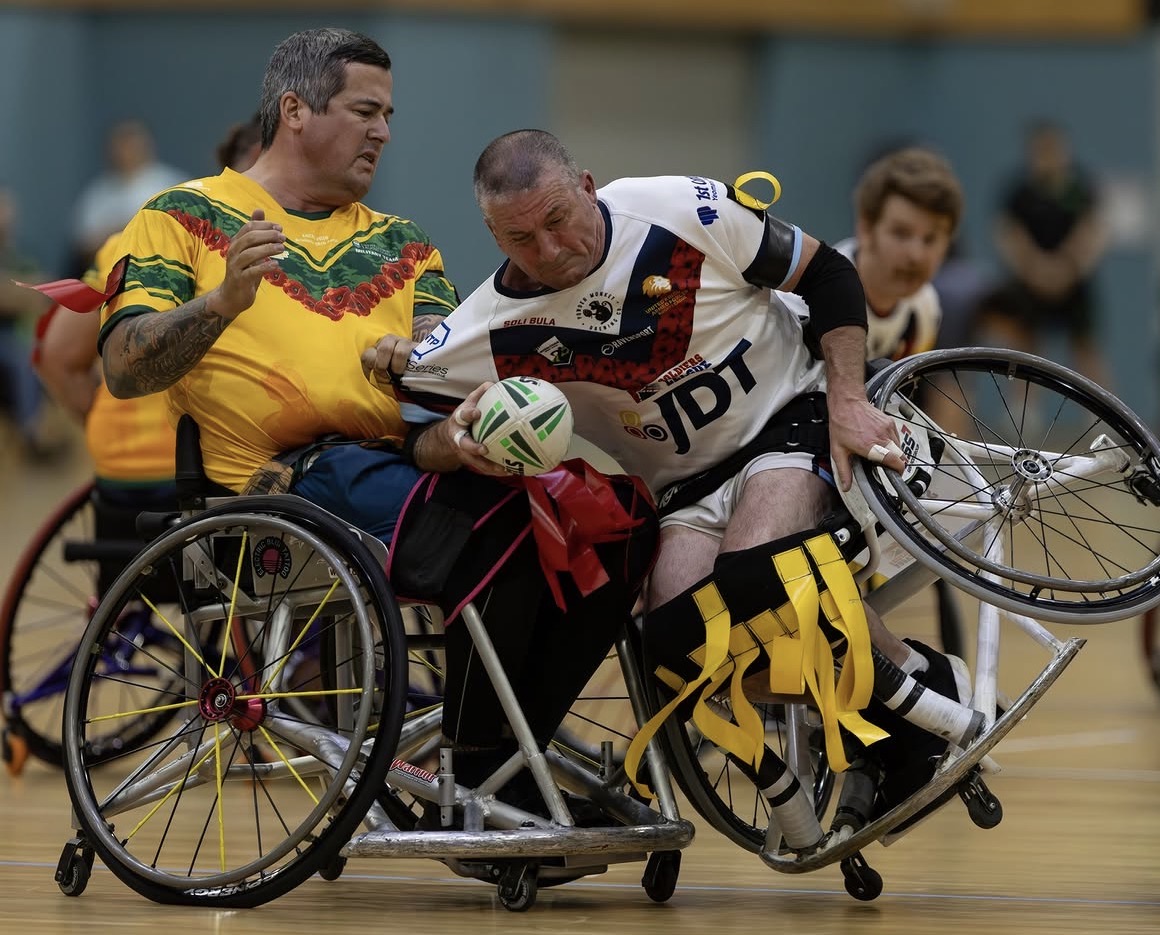
While Australia was a deserving winner, the UK Armed Forces' performance will be remembered for its grit in the face of extreme adversity. Already low on numbers, the team endured multiple significant injuries:
James Simpson‑Hill (dislocated thumb, first half)
Steve Sampher (fractured elbow, first half)
Justin Wells (back injury and spasms, second half)
Yet all continued and completed the contest not as excuses, but as evidence of the character shown throughout the match.
Recognition and Reflection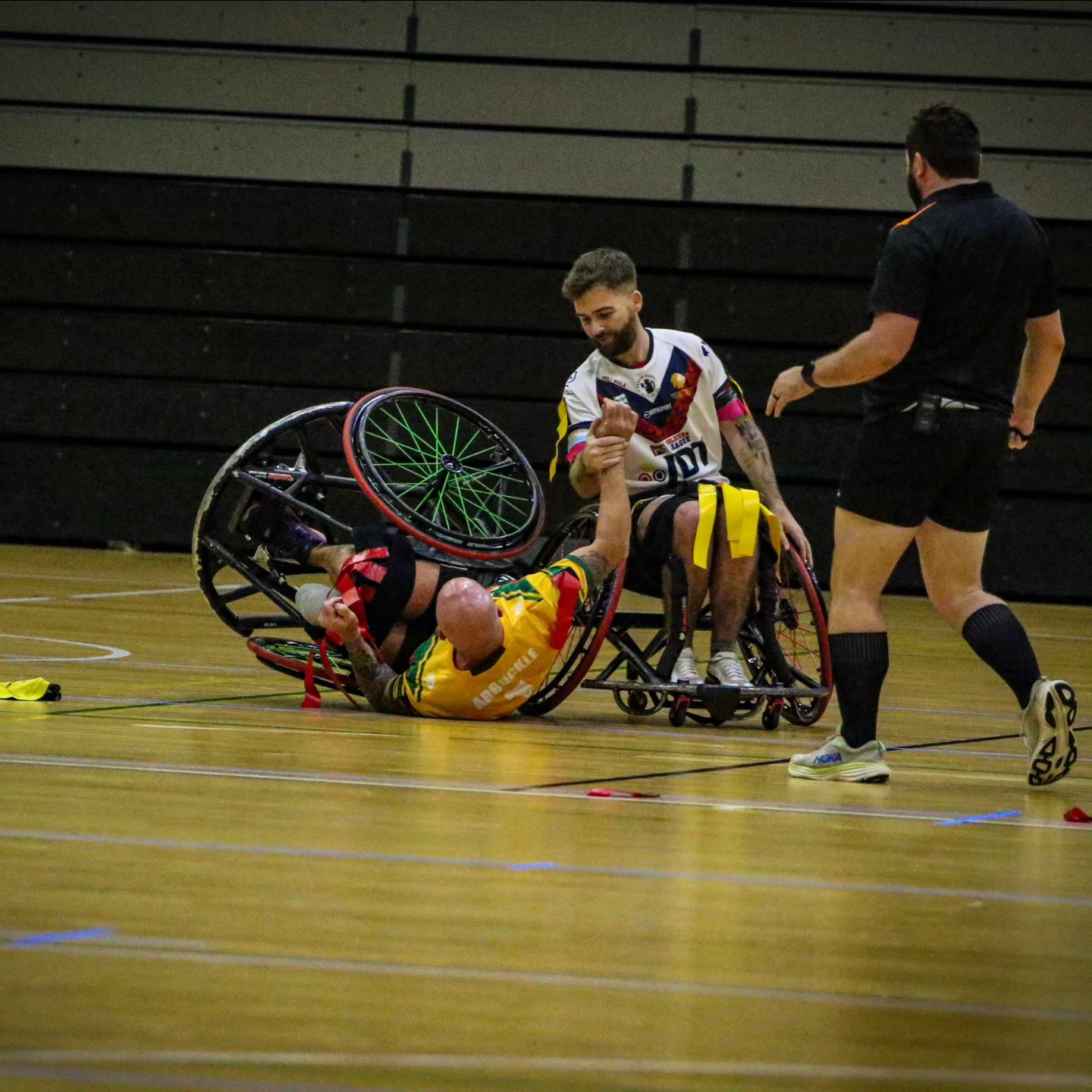
Australia’s second‑half performance embodied the ANZAC spirit, but equally, the UKAF’s refusal to fold under pressure highlighted those same values. NRL Wheelchair coaches Zac Schumacher and Kerri‑Ann Woodbury praised the collective effort, while Wheelchair Rugby League Australia Director Aaron Brooks commended both teams for delivering a match worthy of the occasion.
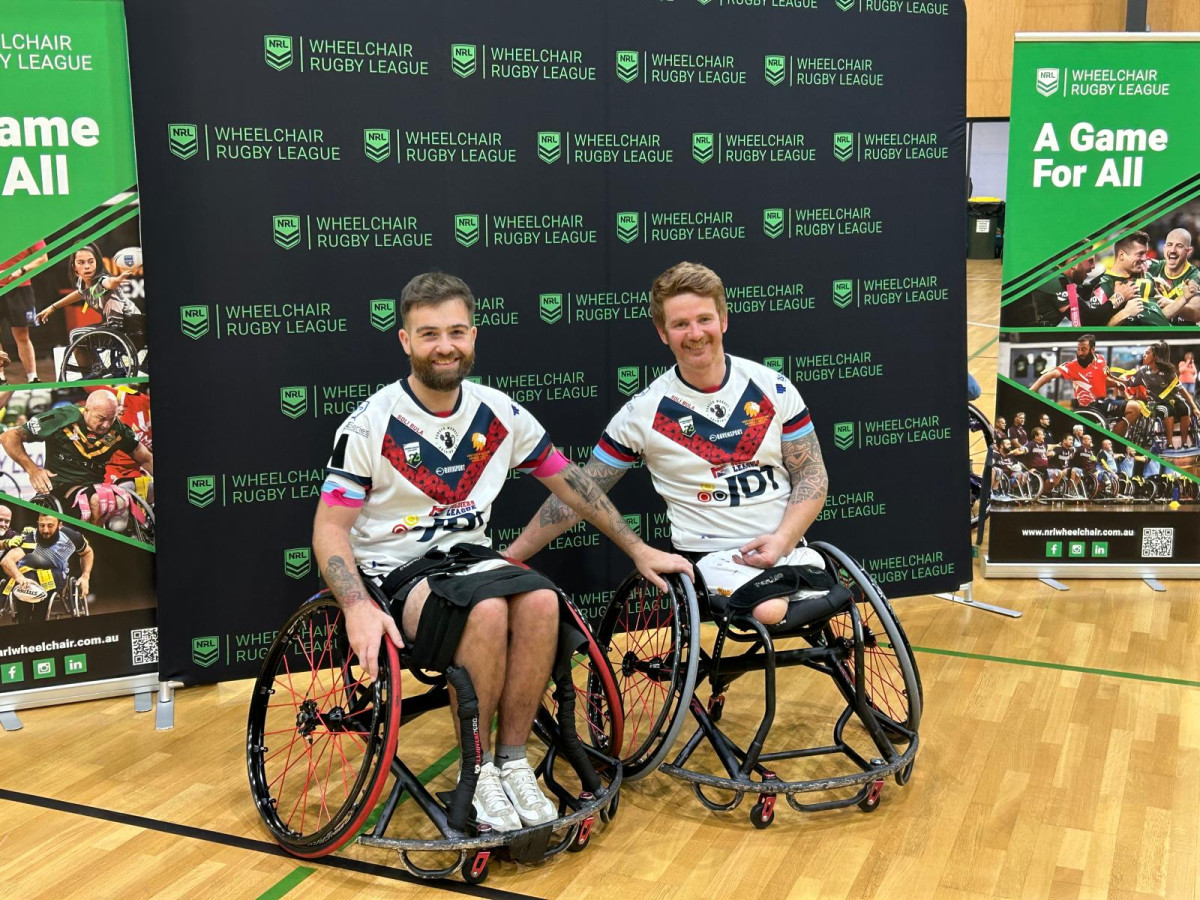
A special presentation honoured Lt Col (Retd) Richard Naivalurua MBE for his contribution to the international game.
UKAF captain Steve Sampher received the match ball, was named Player of the Match, and awarded the inaugural “Spirit of ANZAC” Award — a fitting tribute given both his performance and personal journey. In 2012, Sampher sustained life‑changing injuries in Afghanistan, including a traumatic brain injury and injuries that ultimately led to the amputation of his leg, yet he continues to lead from the front.
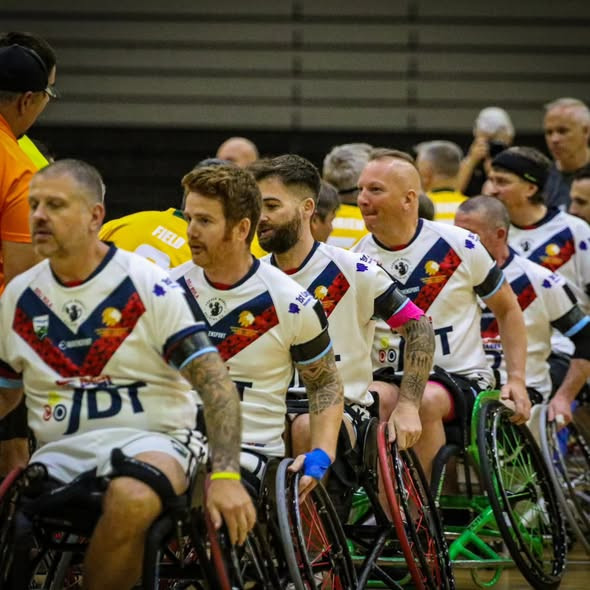
The Player of the Match award will now carry deeper meaning, having been dedicated to the memory of Martin Chadburn, a former UK Army Wheelchair Rugby League player whose life was tragically cut short in the weeks leading up to the fixture. As a mark of respect, both teams wore black armbands.
Final Word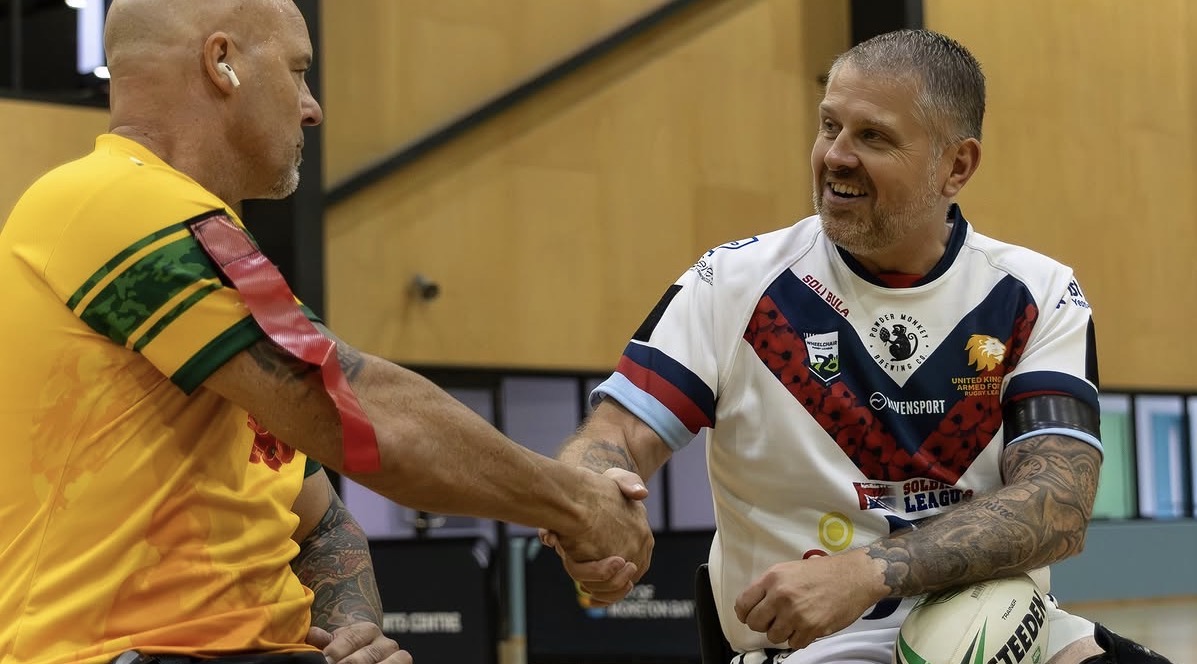
This was more than a game. It was a powerful demonstration of resilience, sacrifice, and unity, values shared by both teams and central to the ANZAC tradition. For the UK Armed Forces, defeat will sting. But their courage, playing through pain and adversity until the final whistle, ensured their performance carried as much weight as the result itself. If this match is any indication, the ANZAC Wheelchair Rugby League clash is set to become one of the sport’s most compelling and meaningful fixtures.